
What a crater day actually looks like, hour by hour.
The Ngorongoro Crater is the world's largest intact volcanic caldera: roughly 260 square kilometres of grassland, swamp, forest and soda lake enclosed by walls some 600 metres high. Around 25,000 large animals live inside it year-round, which makes it one of the few places in Africa where you can reasonably expect to see the Big Five in a single day.
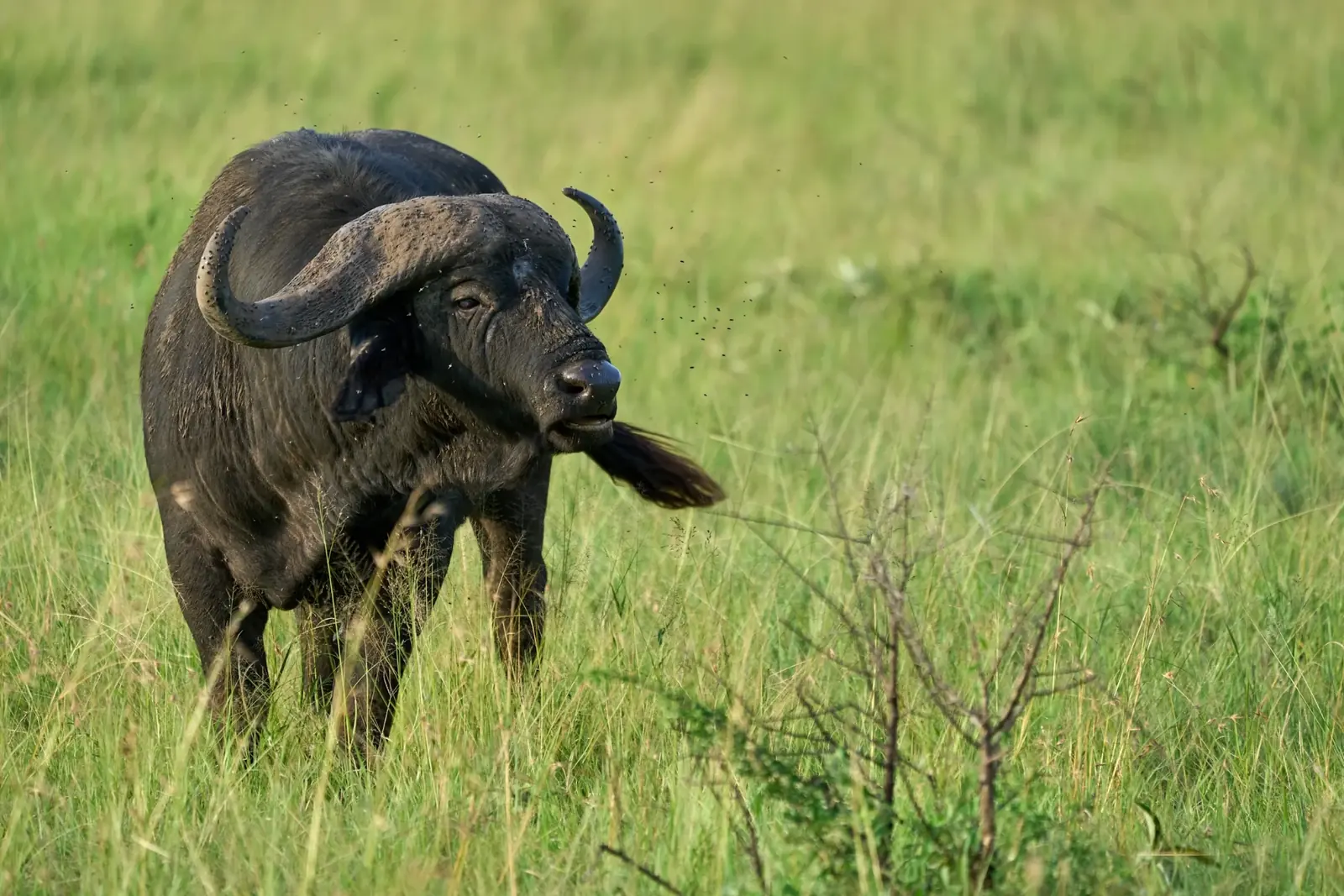
Lion, elephant, buffalo and black rhino are all resident. The crater floor holds one of the last reliable populations of black rhino in northern Tanzania, usually seen at a distance on the Lerai side. Flamingo gather on Lake Magadi, and the Lerai Forest is where the big-tusked bull elephants spend the heat of the day.
Gates open at 6am and the crater is a different place before 9am: cooler, quieter and with far fewer vehicles. We aim to be at the descent road as it opens, take a packed breakfast down with us and come back up early afternoon, before the midday crowd thins the experience.
Vehicles are permitted a maximum of six hours on the crater floor, and off-road driving is not allowed anywhere inside. A single well-planned descent almost always beats two rushed ones, so we build the day around one long, early drive.
Crater-rim lodges put you minutes from the descent road and give you the views, but they are cold at night and priced accordingly. Karatu, 30 to 45 minutes below the rim, is warmer, better value and still allows an early start if you leave by 5:30am. We will tell you honestly which makes sense for your budget.
Bring a fleece: the rim sits at 2,300 metres and mornings are genuinely cold. Conservation fees are charged per vehicle and per person per 24 hours, and they are included in every itinerary we quote.